


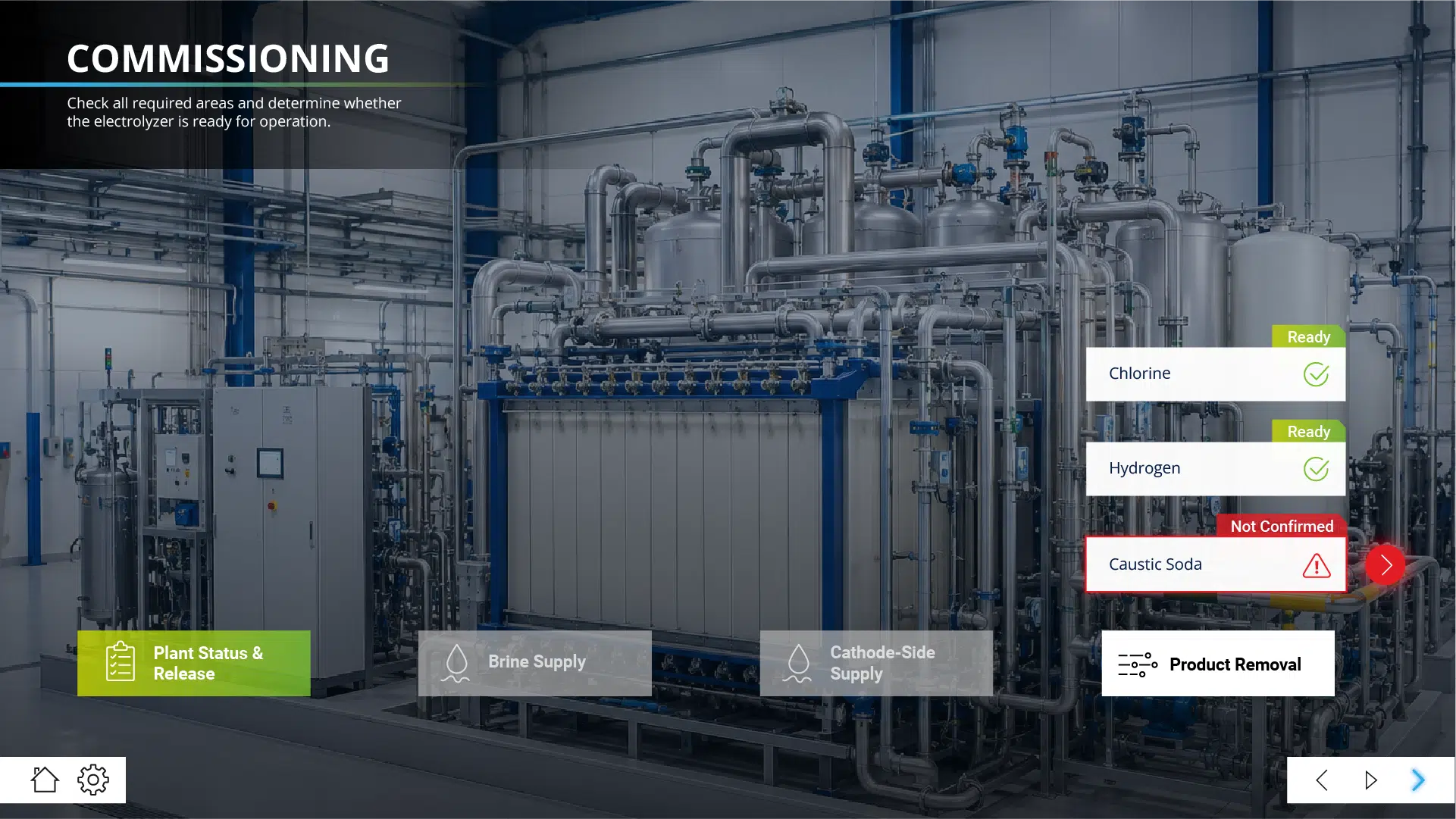
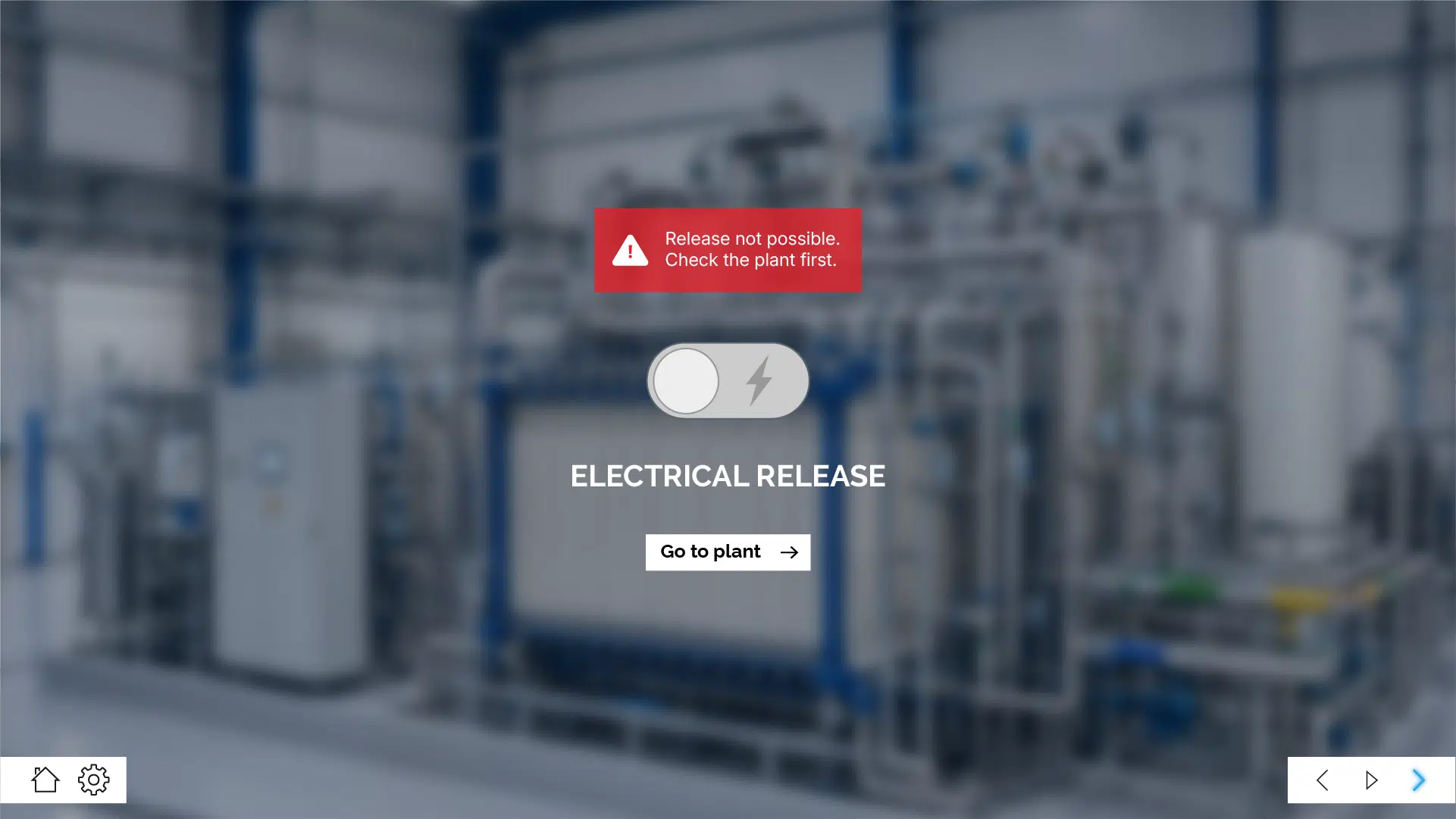

AI-generated visualization. The people, places, and situations depicted are fictional and do not represent any real employees, company locations, or events.
E-Learning for the Chemical Industry: Plant Training
e-Learning for the Chemical Industry: Plant Training and Onboarding
Digital Onboarding for Production Facilities, Chemical Processes, and Safe Plant Operations
Production facilities in the chemical industry are complex. New employees must not only know where individual pieces of equipment are located and how to operate them. To ensure safe plant operation, it is also crucial to understand the underlying chemical processes, interrelationships, and operational procedures. This is exactly where this skillbest best practice comes in.
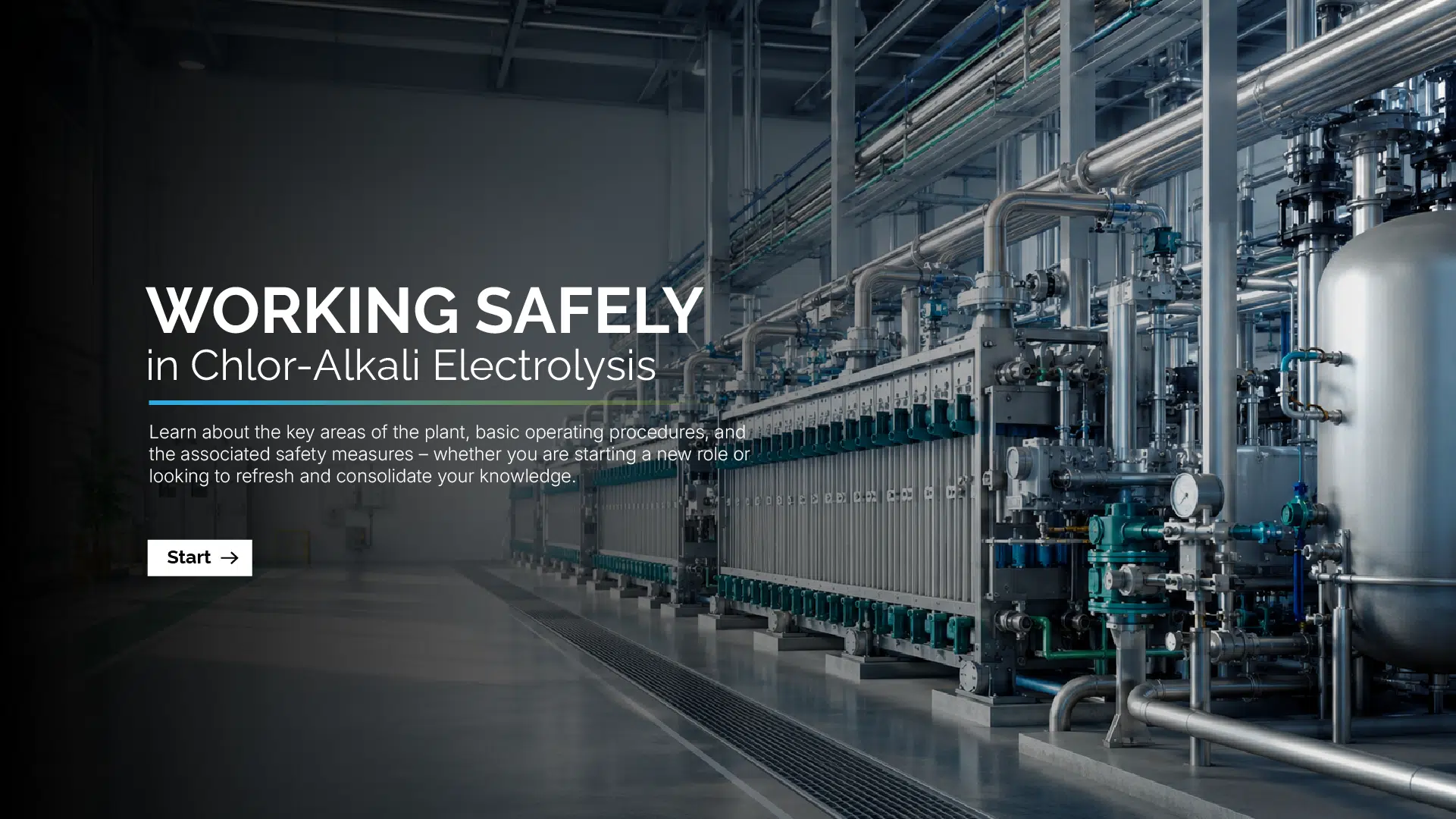
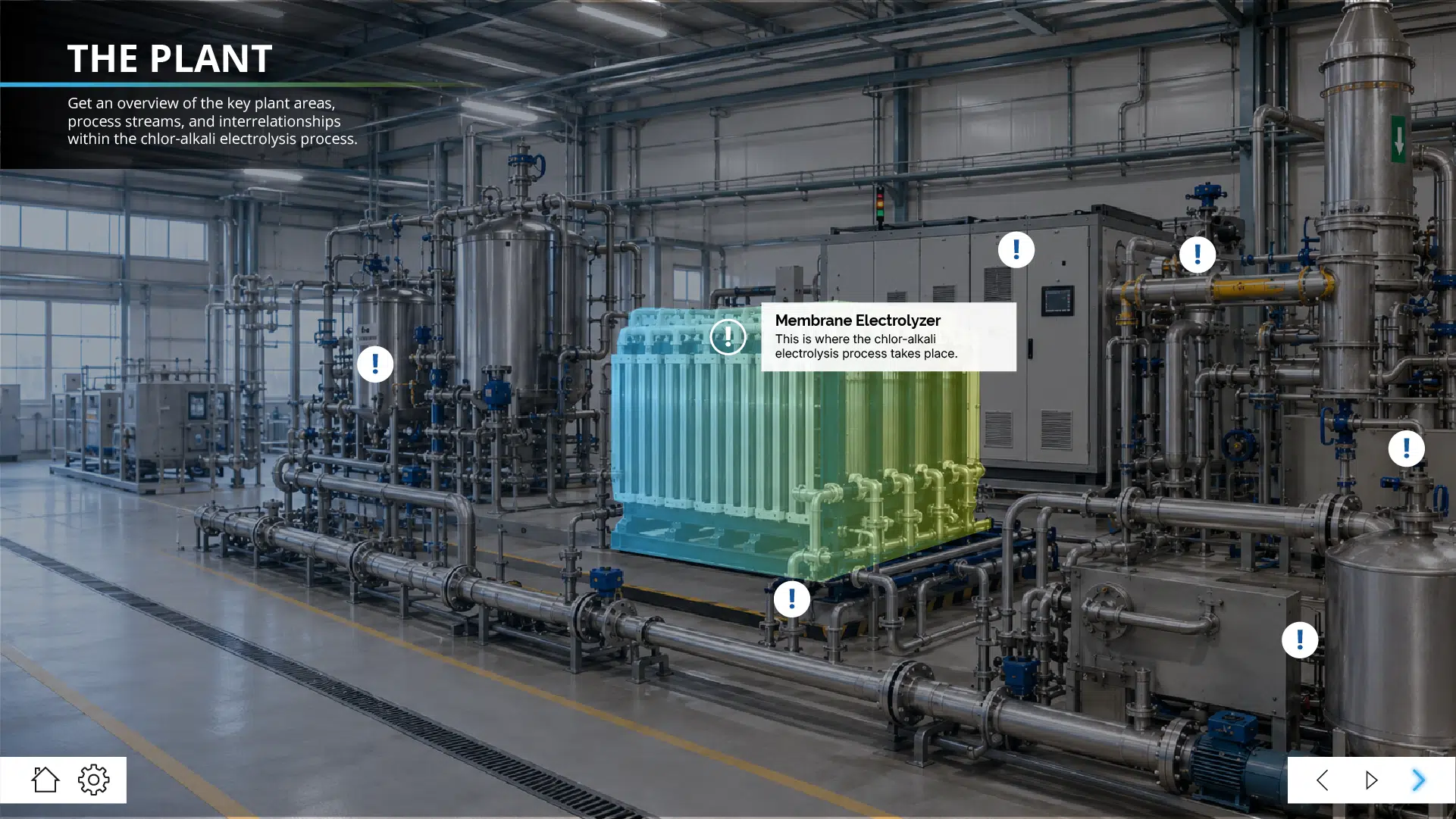
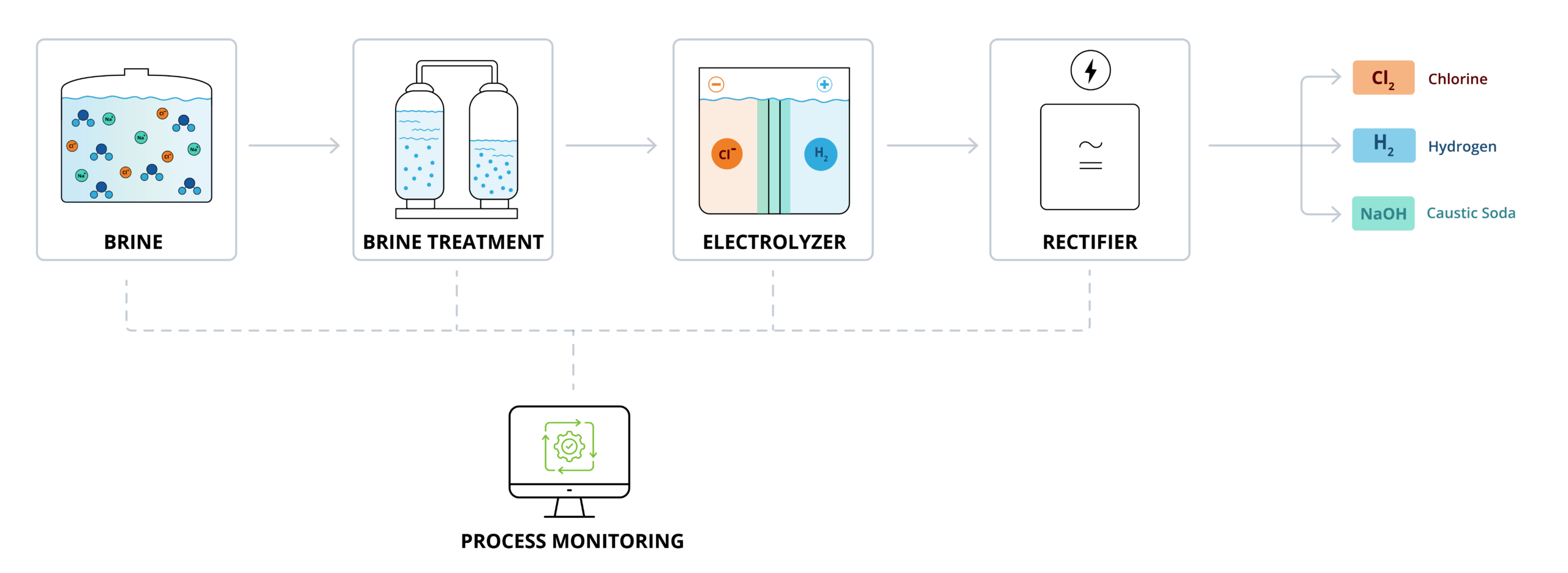
This customized e-learning program for the chemical industry guides new employees through the onboarding process at a chlor-alkali electrolysis plant. Step by step, they learn about the production facility, key plant areas, and their functions. At the same time, the process engineering and chemical processes at each station are explained in a way that is easy to understand and deliberately simplified.
This results in a digital plant training program that combines plant-specific knowledge with theoretical process knowledge. New chemical technicians, plant operators, process operators, and other employees in chemical production thus acquire a common foundation of knowledge before this knowledge is further deepened during hands-on training directly at the plant.

Understand systems, practice commissioning, and respond to malfunctions
In addition to the system’s design and operation, the focus is on the practical application of this knowledge. Students explore the necessary steps prior to commissioning a production facility and must independently assess which requirements must be met before operations can begin.
In this process, the simulated startup is deliberately not always trouble-free. If errors or unexpected situations arise, the learners must assess the situation and decide how to proceed. This directly links the relevant background knowledge to a specific practical scenario.
Trainees not only learn how a process plant works, but also why certain procedures are necessary and what factors play a role in plant safety, process safety, and incident management. This transforms traditional plant and process engineering into an interactive onboarding experience for chemical production, building knowledge in an accessible way and preparing participants for their future work.
FAQ
Questions About Developing Your Equipment Training Program for the Chemical Industry
Are you looking to onboard new employees, explain complex production facilities in an easy-to-understand way, or provide digital training on chemical processes, commissioning, and failure scenarios? Here, you’ll learn how skillbest translates technical plant knowledge into customized, practical, and interactive e-learning for the chemical industry.
Digital training is particularly well-suited for conveying plant knowledge, process understanding, and operational procedures in a structured manner. This includes, for example, onboarding new employees, the design and operation of a production facility, fundamentals of chemistry and process engineering, plant safety, process safety, commissioning, and the proper handling of various operating conditions and malfunctions.
E-learning can serve as a common knowledge base before hands-on training takes place directly at the respective facility.
Complex production facilities are broken down didactically into individual plant areas, functions, and processes. This allows learners to become familiar with the facility step by step and makes it easier for them to connect new information with their existing knowledge.
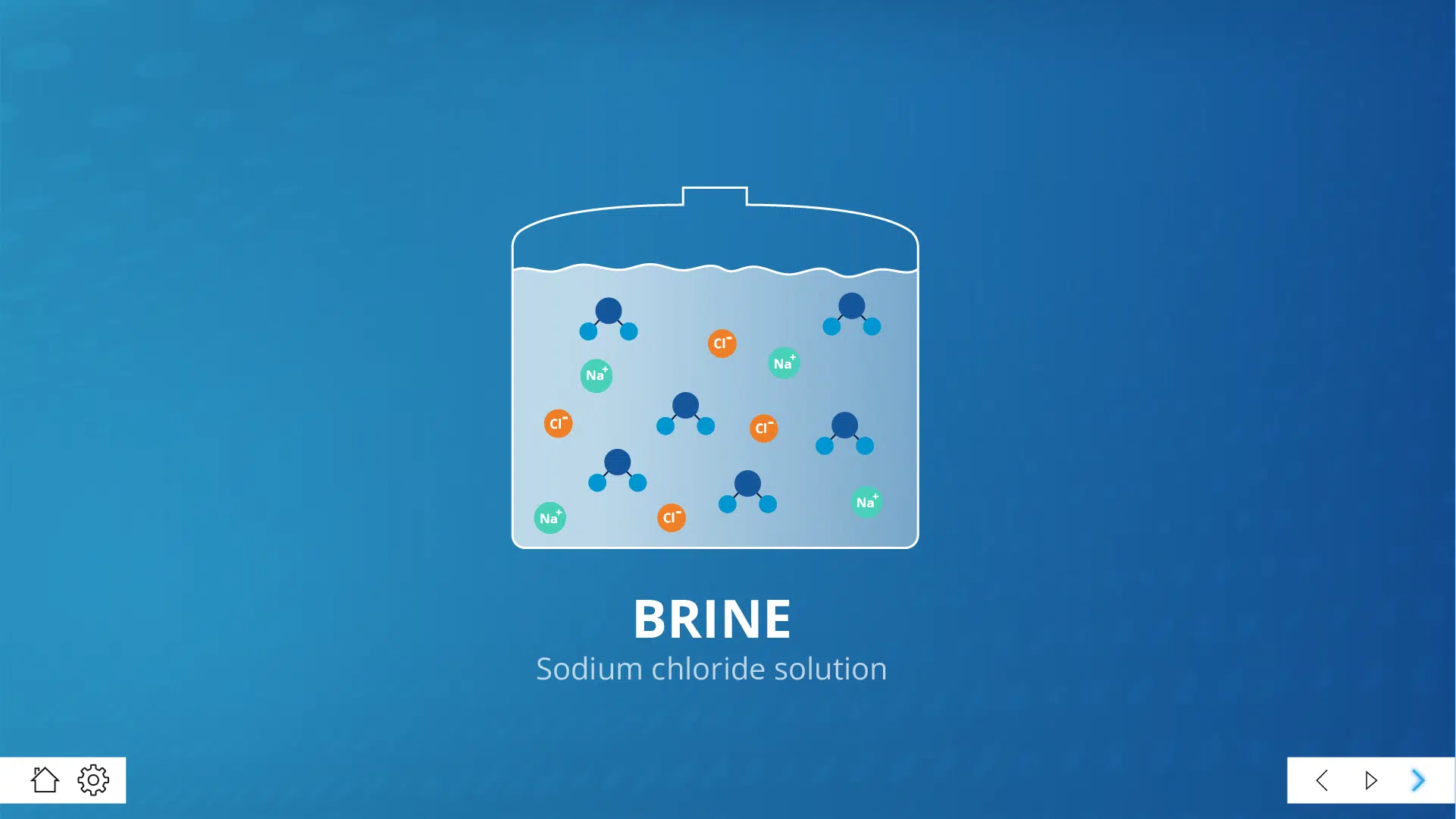
Technical or chemical processes can also be presented using simplified animations, process diagrams, and short explanatory sequences. This not only explains what happens inside a plant but also why certain processes and work steps are necessary.
Yes. The commissioning of a system can be implemented as an interactive process in which learners make their own decisions. They check prerequisites, select the necessary steps, and receive immediate feedback on their decisions.
Deviations or malfunctions can also be incorporated into the process. Learners must then assess why a commissioning process cannot proceed as planned and what further steps are required. In this way, a simple process description is transformed into application-oriented plant training.
Yes. Malfunctions, in particular, are well-suited for scenario-based e-learning. Instead of focusing exclusively on optimal plant operation, realistic deviations or error situations are integrated into the learning process.
Learners must evaluate information, identify connections, and select the appropriate response. This allows them to practice error management and develop an understanding of processes without having to interfere with a real production facility for training purposes.
Existing training materials, process descriptions, work and operating instructions, safety documents, plant schematics, process diagrams, photos, and other available documentation can be used as a foundation.
The expertise of internal subject matter experts is also particularly important. Through collaborative discussions, this knowledge is structured and adapted for the respective target audience in an educational format. In this way, e-learning can also incorporate expertise that was previously passed on mainly through in-person training and practical experience.
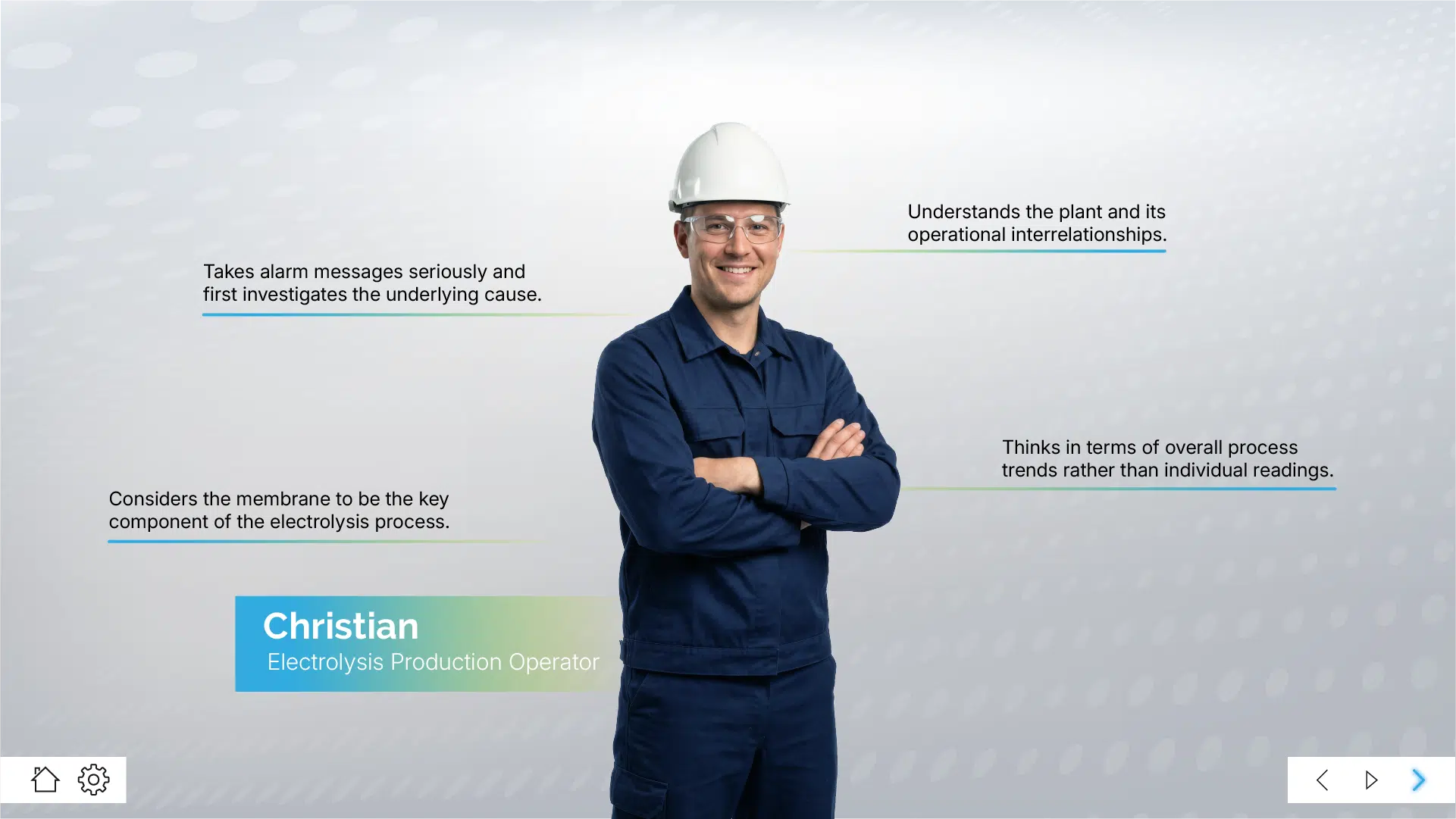
Yes. Depending on their job and area of responsibility, new production employees, chemical technicians, plant operators, or employees from other technical departments, for example, can receive different learning content.
Common fundamentals regarding equipment and processes can remain the same for everyone, while role-specific tasks, safety aspects, or operational procedures can be tailored to specific needs. Using branching paths and variables, the e-learning course can be structured to suit the respective target audience.
Yes. The entire e-learning program—including on-screen text, voice-over narration, subtitles, interactive elements, and exercises—can be implemented in multiple languages. This allows international production sites to follow a common training framework while still receiving the language versions they need.
The completed e-learning course can, for example, be delivered as a SCORM, xAPI, or cmi5 course and integrated into the company’s existing learning management system. Alternatively, depending on the existing learning infrastructure, other delivery formats are possible.
As a result, the training remains part of the existing digital learning environment and can be used for onboarding, recurring training, or to refresh knowledge of equipment and processes.
When it comes to technical training in the chemical industry, an e-learning agency should do more than just visualize content. It is crucial to structure complex plants, chemical processes, and existing expert knowledge in such a way that an understandable and application-oriented learning process emerges.
Particularly in plant training, the instructional design should therefore integrate plant-specific knowledge, theoretical concepts, and concrete practical scenarios. Interactive commissioning exercises, malfunctions, or decision-making scenarios help learners apply the knowledge they’ve acquired even while they’re still in the e-learning module.


Online cybersecurity training – necessary and meaningful
Cybersecurity training online is not only possible, but more effective than expected - if…

Cybersecurity training online: What training should really achieve
A modern online cybersecurity training must do more than just warn. How e-learning…

e-Learning IT security: Why standard courses do not protect
e-Learning IT Security: How customized e-Learnings build awareness and real protection…

Online cybersecurity course for managers: responsibility starts at the top
Managers need customized online cybersecurity courses - for real responsibility and…
Online cybersecurity course: Why awareness alone is not enough
Online cybersecurity course: Strategic guidance for cybersecurity training. Why awareness…

IT security online course: these 5 mistakes to avoid
IT security online course: These mistakes should be avoided during development in order…

Cybersecurity online training with storytelling for real awareness
Cybersecurity online training with storytelling creates real awareness - why HR and…

Cybersecurity online course as a well thought-out curriculum
Curriculum-based cybersecurity online course concept: customized, adaptive content,…

Information security training as e-learning: protection for companies
Discover how customized information security training via e-learning works for large…