


Interactive e-Learning










Interactive e-Learning for Businesses
Interactive e-learning actively engages learners in the learning process. Instead of simply watching or listening to information, they complete tasks, make decisions, explore connections, and apply new knowledge directly.
At skillbest, we create customized e-learning solutions tailored to your content, target audiences, and learning objectives. We translate your company’s expertise into realistic learning scenarios and use them to develop digital training that is easy to understand, visually appealing, and relevant to everyday work.
We do not use interactions merely as a decorative extra. Each activity serves an educational purpose and helps learners understand, apply, and retain new knowledge over the long term.
Interactions with a clear learning objective
Not every clickable area automatically makes a training course interactive. What matters is what learners must do, both mentally and practically. Good interaction encourages them to organize information, identify risks, understand processes, or make a specific decision.
To this end, we work with your experts to analyze which situations are particularly relevant in day-to-day work. Based on these situations, we develop exercises that specifically train the desired behaviors.
The focus is on: decision-making, application, and clear feedback.
Storytelling brings knowledge to life
In e-learning storytelling, content is embedded in a coherent narrative. For example, learners might follow a person through a workday, solve a problem together, or experience the consequences of different decisions.
This provides a clear context for individual pieces of information. Roles, locations, and situations from your company can be directly integrated into the story. The result is not a generic scenario, but a customized e-learning experience in which your employees can see themselves reflected.
The focus is on: relevance, identification, and a clear common thread.
Gamification that motivates without distracting from the content
Gamification in e-learning uses selected mechanisms from games to make progress visible, spark curiosity, and engage learners. These can include challenges, point systems, unlockable content, missions, or immediate feedback.
A good gamification solution is always tailored to the target audience and the learning objective. It should support the content, not overshadow it. That’s why we develop gamified e-learning courses for companies that effectively combine motivation and knowledge transfer.
The focus is on motivation, progress, and voluntary continuing education.
Customized e-learning courses that make knowledge practical
Companies differ in terms of their products, processes, systems, target audiences, and challenges. Therefore, the same interaction cannot be equally suitable for every topic.
Customized e-learning courses are designed with the situations in mind in which employees will later need the knowledge they have acquired. For example, a compliance training course might use realistic dilemmas, while a software training course simulates specific steps for using the software, and a product training course enables virtual consultations.
Our best practices demonstrate how customized e-learning solutions with a clear practical focus are developed from a variety of starting points.
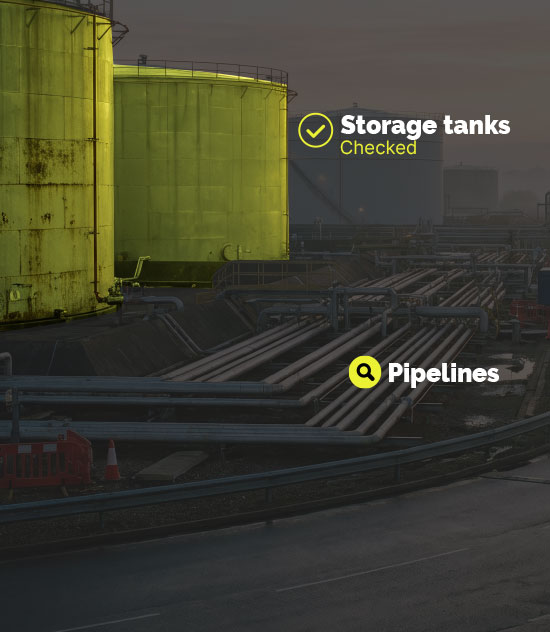
Environmental Management e-Learning for the Petroleum Industry
Environmental management e-learning for the petroleum industry, featuring realistic scenarios, roles, and practical decision-making.

Phishing e-Learning
Train employees to reliably recognize phishing emails in their day-to-day work. Realistic emails, authentic senders and personal feedback increase awareness and promote lasting confidence when dealing with suspicious links.
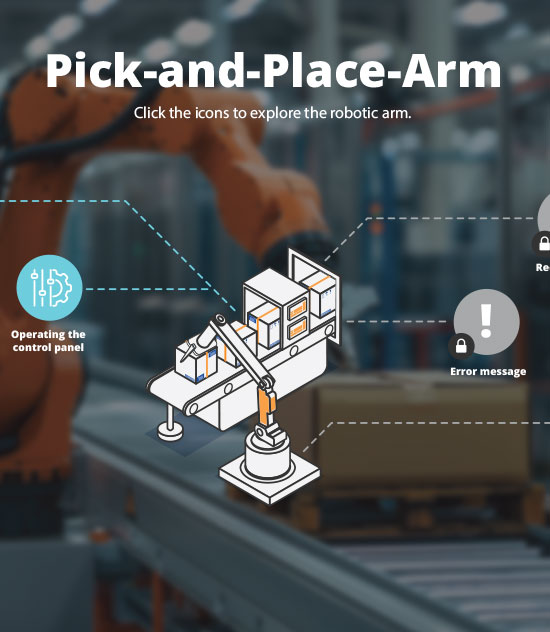
Machine operator training
This best practice shows how e-learning prepares employees for their role as machine operators in a practical way. With interactive machine views, realistic error images and dialog-based challenges, theory becomes applicable knowledge - directly from production, for production.
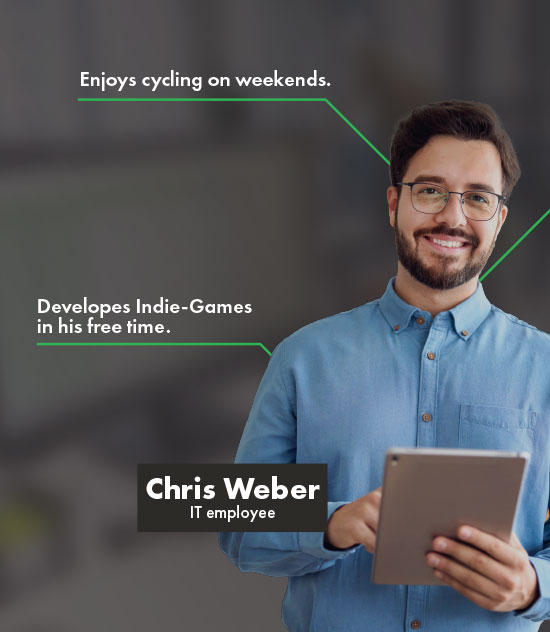
IT Incident Management Training
In this best practice, learners experience realistic IT incidents first-hand - from the first call to proper documentation. In the role of IT employee Chris, they analyze incidents, make decisions and learn about the entire incident response process. Practical, modular and expandable at any time.
Digital product training with practical relevance
Technical devices such as printers are only convincing if you understand them - and can explain them. We have developed a digital product training course that combines theory, installation and sales talk. Interactive modules, storytelling and a practical challenge turn product knowledge into real application expertise.
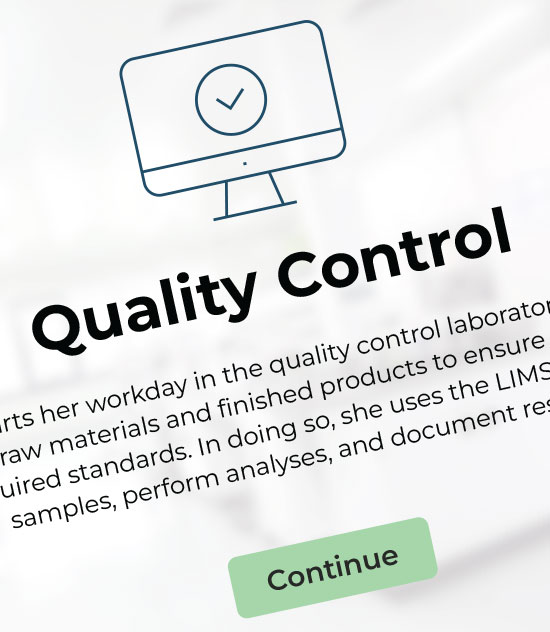
LIMS training
LIMS systems are complex - and often difficult to understand, especially for new employees. Yet their safe use is crucial for smooth quality control processes. We have developed a digital LIMS training course that uses storytelling and interactive elements to convey technical know-how in an understandable and sustainable way.
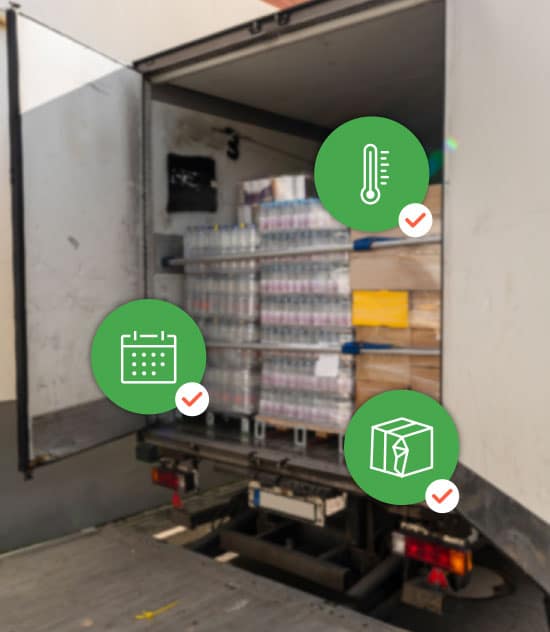
Hygiene training e-learning – Petrol station
Complex hygiene standards do not invite you to concern yourself with them. Yet compliance with them is crucial, especially at petrol station stores, where many goods are stored in a confined space. We have developed a digital hygiene training course that uses storytelling and gamification to efficiently convey hygiene know-how.

Compliance e-Learning
Compliance is an important topic for any large company in order to remain successful in the long term. Unfortunately, relevant training courses are often dry and boring. We have now changed that: Our digital compliance e-learning sends learners on an interactive business and knowledge journey with sales manager Hannah.
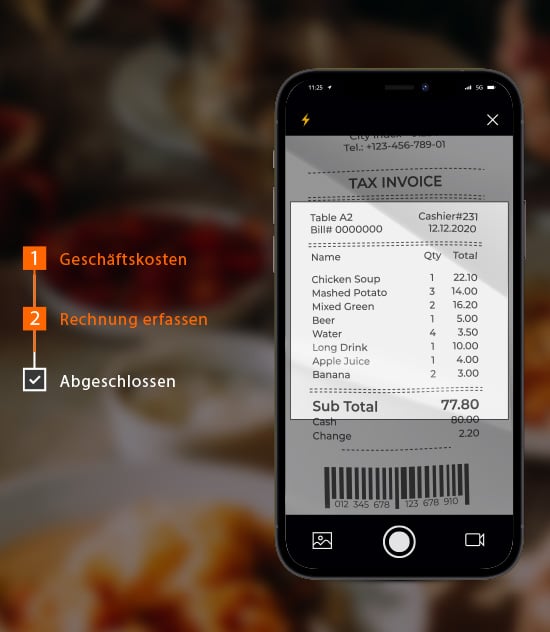
e-Learning travel expense report
What about the taxi receipts? Where are they uploaded? What rules apply to business meals? Questions like these often lead to errors in travel expense accounting. Our e-learning offers a remedy: employees learn all the steps in a fun way on a virtual business trip. Storytelling ensures motivation and quick learning success.

First aid online course
Many people have attended a first aid course at some point, but their knowledge has often faded. Our online first aid course helps to refresh it. Videos and interactive elements are used to simulate realistic emergencies that prompt action. In this way, we specifically train decision-making under stress.

Online driver instruction
Driver training is often seen as a tiresome compulsory program. With our online driver training, we convey the content efficiently and save valuable resources. Topics such as logbooks and expense reports make the tool a comprehensive solution that goes beyond fleet management.

e-Learning Banking
In the bank branch business, employees often change positions or are joined by temporary staff. New employees need to be trained regularly, which is time-consuming. Our e-learning offers a solution: In a digital training course, they experience a typical working day and learn about processes and customer interactions.
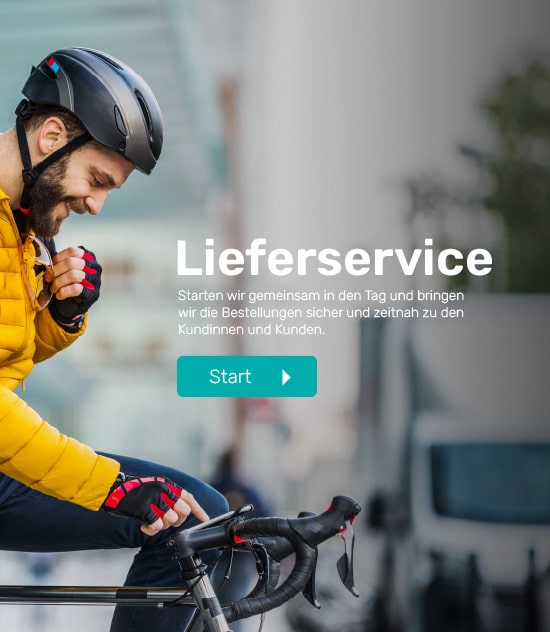
Job simulation delivery service
There is often a high turnover in delivery services, which requires constant training. A job simulation via e-learning can shorten and improve the induction phase. Storytelling makes the content exciting, saves time and resources and increases motivation and learning success.

Onboarding e-learning bakery
Bakeries face the challenge of regularly training new employees. Digital onboarding with a modern e-learning solution can help. Important skills are learned in a playful and stress-free way so that they are quickly ready to work in the branches.
Create an interactive training course that fits into your daily work routine
If you want to create an interactive training course, you shouldn’t start by asking what features it should have. First, you need to clarify what learners should be able to understand, decide, or do after completing the training.
This learning objective determines which form of interaction is most appropriate. Sometimes a brief decision-making scenario is sufficient. In other projects, comprehensive simulations, branching scenarios, or a cohesive learning environment are the better solution.
To implement this, techniques such as storytelling, gamification, software simulations, interactive videos, product experiences, and realistic case studies can be combined.
This results in a customized e-learning solution in which content, design, and interaction are coordinated. Learners do not work on arbitrary tasks, but rather on situations that are relevant to their own work.
Decision-Making Scenarios
Practice Real-Life Situations Safely
In decision-making scenarios, learners take on an active role. They assess a situation, choose a course of action, and then experience the consequences of their decision.
This allows organizations to practice handling critical situations without posing any real risk. This method is particularly well-suited for compliance, occupational safety, cybersecurity, leadership, and customer communication.
Simulations
Try out the processes yourself
Software, machines, and complex processes can be practiced step by step in a controlled learning environment. Learners don't just watch a demonstration; they perform key tasks themselves.
Errors can be deliberately allowed and accompanied by clear feedback. This builds confidence in using the new software, process, or system before it is implemented in day-to-day operations.
Simulated learning
Experience Knowledge Through a Story
A storytelling-based e-learning course connects individual learning modules through a coherent narrative. Learners follow characters, solve problems, and discover why certain information is relevant to their work.
This process can incorporate real roles, departments, products, and locations within your company. The narrative provides context and helps structure even complex topics in a way that is easy to understand.
Gamification
Promoting Motivation in a Targeted Way
Gamification in corporate e-learning does not mean turning every training course into a game. Rather, it involves using appropriate game mechanics to make learning progress visible and encourage active engagement with the subject matter.
Challenges, missions, points, or unlockable content can be particularly helpful when the goal is to keep learners motivated across multiple modules. The design always depends on the target audience, corporate culture, and learning objective.
Interactive Learning Environments
Exploring Products and Connections
In an interactive learning environment, learners can independently explore spaces, machines, products, or process landscapes. They select relevant areas and receive information, tasks, or additional content specifically tailored to those areas.
This makes complex information easy to understand in a spatial and visual way. This format is particularly well-suited for product training, technical training, onboarding, and explaining extensive business processes.
Role-Based Learning
Targeting Different Audiences
Not all employees need the same information. Role-based learning paths make it possible to tailor content, examples, and assignments to different roles, locations, or experience levels.
This ensures that each target group receives exactly the knowledge it needs for its day-to-day work. This reduces unnecessary learning time and makes customized e-learning particularly effective, even for companies with an international presence.
Our Process
This Is How Customized Interactive E-Learning Is Created
01 Analysis
To begin with, we clarify the topic, target audience, learning objectives, and technical requirements. Together, we analyze existing presentations, guidelines, processes, videos, or other source materials.
It is particularly important to consider in which situations learners will need this new knowledge later on and which decisions or actions they should be able to perform with confidence.
02 Interaction Concept
Based on the analysis, we develop a clear learning structure. We define which content should be explained, applied in practice, and assessed.
We then select appropriate methods. These may include decision-making scenarios, storytelling, simulations, gamification, or interactive explorations.
03 Prototype
An initial prototype provides an early glimpse of what the customized e-learning solution might look like and how it might work.
Design, navigation, visual style, characters, and the level of interaction are coordinated before the entire training program is developed. This gives everyone involved a concrete idea of what the learning experience will be like early on.
04 Visual Script
The visual script includes fully developed content, voice-over scripts, images, tasks, animations, and feedback.
Your project team can review the course from both a technical and visual perspective. This makes even complex interactions and branching scenarios easy to understand before technical development begins.
05 Production
Once approved, our developers will implement the interactive e-learning course using the appropriate authoring tool.
Content, design, animations, audio, and learning logic are combined into a single, intuitive user experience. During development, we test features and optimize how the individual elements work together.
06 Quality Assurance and Rollout
Before delivery, we review the training course in terms of content, visuals, and technical aspects. We also conduct comprehensive testing of interactions, navigation, audio, subtitles, and knowledge assessments.
You will then receive the completed course in the agreed-upon format for your learning management system. Depending on your requirements, we can provide SCORM-, xAPI-, or cmi5-compatible versions, for example.
FAQ
Frequently Asked Questions About Interactive E-Learning Courses
Would you like to create an interactive training course or find out which customized e-learning solution is best suited to your topic? We’d be happy to advise you on the learning concept, level of interaction, design, and technical implementation.
Interactive e-learning actively engages learners in the learning process. They don’t just absorb information; they complete tasks, make decisions, explore content, and apply new knowledge in realistic situations.
Interaction should always serve a specific learning objective. A training course does not become better simply because it contains as many clickable elements as possible.
First, we define what knowledge or behaviors the training is intended to impart. Next, we analyze typical situations from everyday work and translate them into appropriate learning activities.
An interactive training course can include, for example, decision-making scenarios, simulations, storytelling, gamification, interactive videos, or knowledge checks. Which methods are appropriate depends on the topic and the target audience.
Customized e-learning is particularly useful when the goal is to teach employees about the company’s own products, processes, systems, policies, or roles.
Even for strategically important topics, customized e-learning can offer advantages. Real-world examples and typical decision-making scenarios make the content easier to understand and facilitate its application in everyday work.
A standard course covers general content intended to apply equally to many companies. A customized e-learning solution, on the other hand, is developed specifically to meet a company’s requirements.
In doing so, internal terminology, processes, products, roles, locations, and visual design guidelines can be taken into account. Learning methods and interactions are also selected to suit the specific objective.
Suitable interactions include decision-making scenarios, software simulations, matching exercises, interactive videos, dialogs, virtual product environments, and realistic knowledge checks.
What matters is not the number of interactions, but their educational function. Learners should be able to recognize, apply, or verify something through each task.
In e-learning storytelling, content is embedded in a story or a coherent plot. Learners follow characters, complete tasks, and experience situations from the characters’ perspective.
Storytelling provides context and makes abstract content easier to understand. It is particularly effective when it draws on roles and challenges from the target audience’s actual work environment.
Gamification can be useful when the goal is to keep learners motivated over a longer period of time, to make their progress visible, or to combine multiple tasks into a single, cohesive challenge.
For successful gamified e-learning, the mechanisms used must be appropriate for the target audience and the subject matter. Points, levels, or missions should support the learning process and not distract from the actual content.
The appropriate level of interaction depends on the learning objective. Information that simply needs to be categorized usually requires less interactivity than complex processes or critical decision-making situations.
A good solution combines concise information segments with targeted exercises. This keeps customized e-learning courses engaging without placing an unnecessary burden on learners.
The costs depend on the planned duration of the course, the complexity of the content, the level of interaction, the design, and the media used.
Animations, simulations, videos, voice-overs, and additional language versions also affect the scope of the project. After an initial consultation and a review of existing documents, a specific estimate can be provided.
A compact module can be developed in just a few weeks. Extensive learning environments, simulations, or multilingual training programs require more time, as expected.
In addition to the scope of the course, the availability of experts, the number of feedback loops, and the complexity of the interactions also affect the project duration.
Yes. Presentations, manuals, guidelines, videos, process descriptions, screenshots, or existing in-person training sessions can serve as a basis.
The materials do not yet need to be formatted for digital learning. We will work with your subject matter experts to determine which information is relevant and how it can be used to create an interactive learning experience.
Yes. The completed courses can be prepared for deployment in a learning management system.
Depending on the technical environment, options such as SCORM, xAPI, or cmi5 are available. Requirements for tracking, completion criteria, knowledge assessments, and multilingual support are taken into account during the design phase.

Online cybersecurity training – necessary and meaningful
Cybersecurity training online is not only possible, but more effective than expected - if…
Cybersecurity training online: What training should really achieve
A modern online cybersecurity training must do more than just warn. How e-learning…
e-Learning IT security: Why standard courses do not protect
e-Learning IT Security: How customized e-Learnings build awareness and real protection…
Online cybersecurity course for managers: responsibility starts at the top
Managers need customized online cybersecurity courses - for real responsibility and…
Online cybersecurity course: Why awareness alone is not enough
Online cybersecurity course: Strategic guidance for cybersecurity training. Why awareness…
IT security online course: these 5 mistakes to avoid
IT security online course: These mistakes should be avoided during development in order…
Cybersecurity online training with storytelling for real awareness
Cybersecurity online training with storytelling creates real awareness - why HR and…
Cybersecurity online course as a well thought-out curriculum
Curriculum-based cybersecurity online course concept: customized, adaptive content,…
Information security training as e-learning: protection for companies
Discover how customized information security training via e-learning works for large…